


About
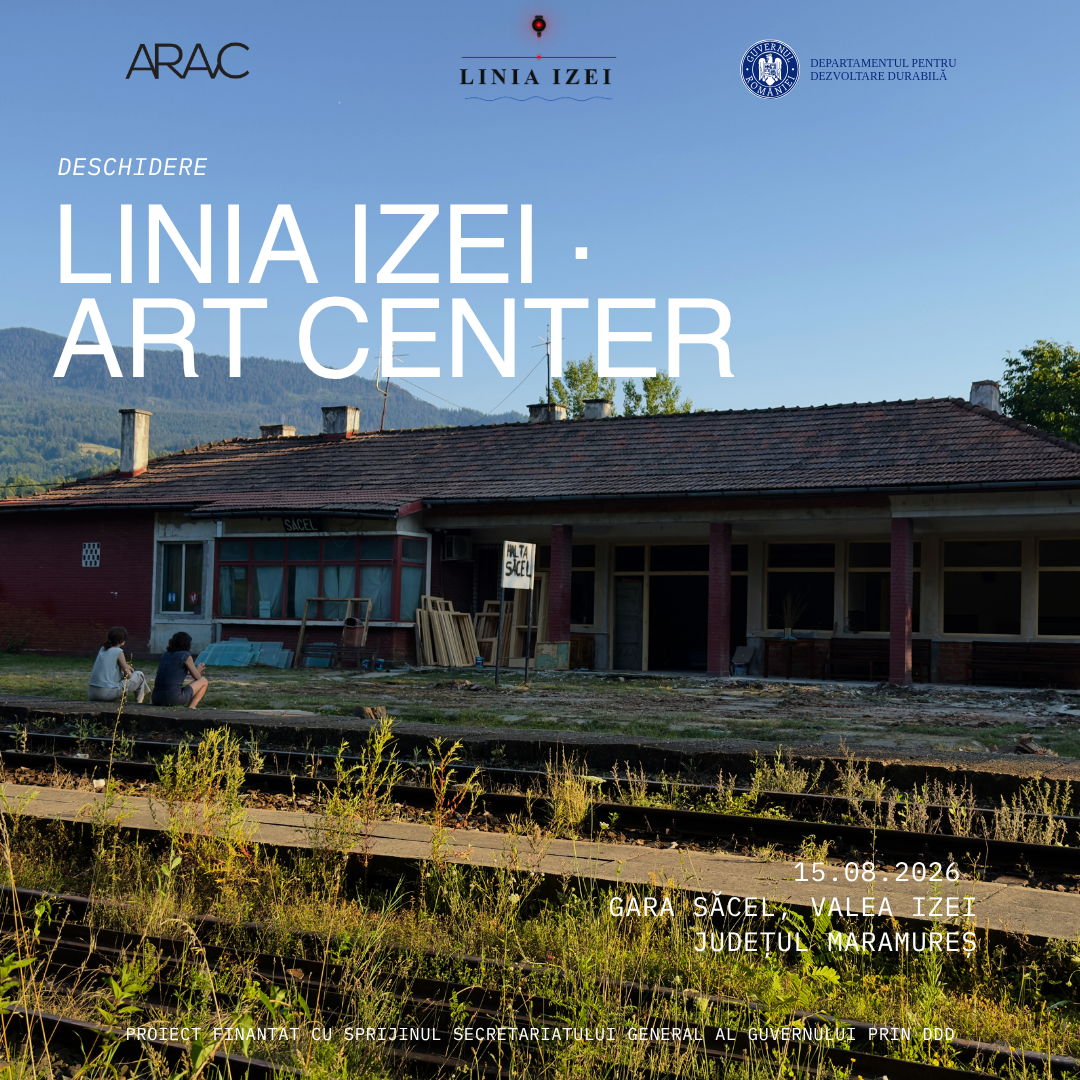
The Iza Line takes up the railway route of Main Line 409, between Salva and Sighetu Marmației, and reads it as a technical extension of the watercourse that gives the valley its name, so that the reconverted halt at Săcel becomes a node of passage within a network that cannot be reduced to railway infrastructure, overlapping conceptually with the hydrographic network of the place — the Iza together with the adjacent streams already mapped in the Josephine surveys — and with the bodies that, following Astrida Neimanis, constitute themselves through circulation, as waters forever in transit from one body into another.
The edition takes up hydrofeminism as both working methodology and theoretical ground, since water is understood as a connective tissue that binds the repetitive gestures of craft to the flow of the river, and the village whirlpools — Moara Mecleș, Moara Burnar — appear as devices that render this continuity audible and visible, while works such as Mihaela Moldovan’s string cartography translate variations in flow into variations in the thickness of the thread, bringing the hydrographic network of Săcel to the fore as a score of the place. The Iza becomes the local instance of a shared hydrological logic, crossing the valley and the formal borders alike, and so turning into a channel of belonging between otherwise distinct contexts.
On the occasion of its third edition, titled Rhythms of Continuity, the Iza Line treats the station as a listening apparatus rather than as a mere exhibitionary container, within a rhythmanalytic frame after Lefebvre in which unequal periodicities overlap — the train that stops at the halt, the flow of the river, the craftsperson’s repetitive gesture — and in which resilience as daily practice and people understood as infrastructure (Simone) sustain the idea that the conservation of continuity is maintained through recurrent gestures. The everyday, seemingly disenchanted, thus restores to hyper-technological reality the mechanism of survival, one that exceeds the borders of a so-called absence, harmonizing two distinct worlds within a grammar not only of survival but of a renewed enchantment.